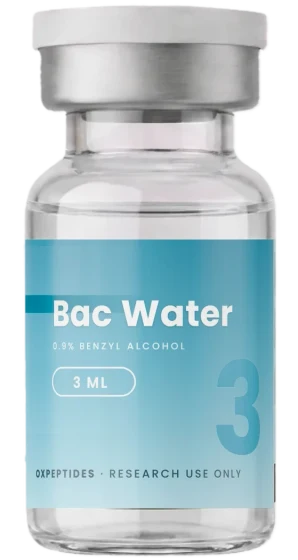
Definition and composition
What Is Bacteriostatic Water?
Bacteriostatic water is sterile water that contains 0.9% benzyl alcohol, a preservative that slows bacterial growth. Labs use it as a diluent when one vial will be opened more than once.
- 0.9%
- benzyl alcohol
- 3 mL
- per vial
- 28 days
- after first puncture
- 4.5–7.0
- pH range (USP)
A simple definition
Bacteriostatic water has two ingredients, sterile water and benzyl alcohol at 0.9%. The water dissolves the compound, and the alcohol protects the vial between uses.
The USP monograph sets its pH between 4.5 and 7.0. It is clear and colourless, and it may carry a faint smell of the alcohol.
| Component | Amount | Role |
|---|---|---|
| Sterile water | About 99.1% | Solvent and diluent |
| Benzyl alcohol | 0.9% | Bacteriostatic preservative |
| pH | 4.5 to 7.0 (USP range) | Mildly acidic to neutral |
| Container | Sealed glass vial, bromobutyl stopper | Keeps the vial sealed until first puncture |
How benzyl alcohol works
Benzyl alcohol is bacteriostatic. It stops bacteria from multiplying, but it does not kill every bacterium that enters the vial. A bactericidal agent would kill them.
That difference matters in practice. The preservative buys time between punctures, which is why an opened vial has a 28-day limit and why clean handling still counts.
Where to buy
OXpeptides
Bac Water 3 mL
€10.90
- 3 mL glass vial, 0.9% benzyl alcohol
- Delivered in 4–6 working days, shipped from Europe
- Shipping €9.90, free on orders over €120
- 30-day returns, full refund
This water is sold and shipped by OXpeptides, from a warehouse in Europe.
What labs use it for
The main use is reconstitution. Many research compounds, peptides among them, are supplied as a lyophilised (freeze-dried) powder that must be dissolved before use.
Because the vial tolerates several draws, a lab can take what it needs and come back to the same vial over the following weeks.
- Dissolving lyophilised peptides and other freeze-dried reagents
- Diluting a stock solution in several steps from one vial
- Keeping a diluent on the bench for repeated use within 28 days
When it is the wrong choice
Some peptides and proteins react badly to benzyl alcohol, which can cause aggregation or loss of activity. For those, laboratory guidance points to sterile water or a buffer instead. Check the data sheet from the supplier of your reagent before choosing a diluent.
Common questions
Is bacteriostatic water the same as sterile water?
No. Sterile water has no preservative and is meant for a single use. Bacteriostatic water contains 0.9% benzyl alcohol, so the vial can be opened several times within 28 days.
What does bacteriostatic mean?
It means the substance stops bacteria from multiplying. It does not sterilise. A bacteriostatic agent holds growth back, while a bactericidal one kills.
Why is benzyl alcohol added?
It acts as a preservative. Each time a stopper is punctured there is a small risk of contamination, and benzyl alcohol keeps bacteria from growing in the vial afterwards.
Can you drink bacteriostatic water?
It is not intended for drinking or any use in people. It is sold as a laboratory reagent for research use only.